
Hualong District, Puyang City, Henan Province, China
+8618864448123
angel@dingshengchemical.com
Product: Acetone (alias: Dimethyl Ketone), IUPAC Name: Propan-2-one, English Name: Acetone, CAS No.: 67-64-1, Molecular Formula: C₃H₆O or CH₃COCH₃. It is a simple saturated aliphatic ketone and a bulk basic organic chemical raw material worldwide.
Molecules contain carbonyl groups and feature active chemical properties:
1. Addition Reaction: It can undergo addition reactions with hydrogen, hydrogen cyanide and alcohols to produce isopropanol, cyanohydrin and ketal; ketals are often used to protect hydroxyl groups in organic synthesis.
2. Iodoform Reaction: Reacts with halogens under alkaline conditions to form iodoform, which is a characteristic reaction of methyl ketones.
3. Oxidation and Reduction: Not easily oxidized by weak oxidants at room temperature; cleavage occurs upon heating with strong oxidants to generate acetic acid and carbon dioxide; hydrogenation reduction yields isopropanol.
4. Condensation Reaction: Aldol condensation takes place in an alkaline environment to form important intermediates such as diacetone alcohol and isophorone.
Incompatible Substances: Strong oxidizing agents, concentrated nitric acid, chloroform and strong alkalis. Mixing storage and transportation are strictly prohibited.
Acetone is one of the world’s most widely used solvents due to its excellent solubility and rapid volatility. It is widely found in various daily necessities.
Acetone in the Chemical Industry
Acetone is mainly used as a solvent capable of dissolving many organic compounds. It serves as the starting material for multiple synthetic reactions in the chemical industry, such as the production of plastics, paints, varnishes, adhesives and nitrocellulose. Acetone is also an important intermediate for manufacturing chloroform and bromoacetone (tear gas). A key derivative of acetone is polymethyl methacrylate (PMMA), commonly known as acrylic glass or organic glass. It is applied in coatings, inks, adhesives, spray paints, man-made fibers and acetate fiber spinning; it is also used for equipment cleaning, extraction and dewaxing, as well as fast-drying thinners featuring fast volatilization and low residue.
It is used to synthesize bulk chemical products including bisphenol A, methyl methacrylate (monomer for organic glass), isophorone, diacetone alcohol, epoxy resin and polyisoprene rubber, acting as a critical node in the chemical industrial chain.
Acetone in Medical Applications
In the medical field, acetone is used for disinfection. In dentistry, acetone-containing solutions are applied to clean prepared dentin surfaces, root canals and dental restorations. In pharmaceuticals, it functions as an extractant (e.g., for vitamin production) and an auxiliary ingredient for disinfectants.
Acetone in Agriculture
In agriculture, acetone is used to manufacture pesticides. It acts as a carrier for active substances such as herbicides and insecticides.
Acetone in the Food Industry
Acetone can dissolve plant aromas and is therefore used to produce natural flavors in the food industry. It serves as an extraction solvent in food processing (e.g., caffeine extraction), but it must fully volatilize in the final products.
Other Application Fields of Acetone
Acetone is also used to produce methyl methacrylate and bisphenol A, both essential for manufacturing widely used plastics. Together with hydrogen peroxide, acetone is one of the basic raw materials for acetone peroxide (TATP), an explosive compound. To achieve more efficient fuel combustion, a small amount of acetone is added to gasoline or diesel in some countries at a ratio of 1:2000 to 1:5000.
In the photochemical production of PCBs, acetone is used for final degreasing of PCBs prior to soldering. In daily cosmetics, it is the main ingredient in nail polish remover to dissolve nail polish; it works as a thinner in coatings, a solvent for PVC adhesives, as well as a co-solvent and degreaser in cosmetics such as toners.
In laboratories, acetone is used as a solvent for equipment cleaning and experiments. In the textile industry, for example, acetone can remove oil stains and other contaminants from fabrics.
Strict temperature control is required. It must be stored in a cool, well-ventilated dedicated warehouse, away from fire and heat sources, and the warehouse temperature shall not exceed 30℃. Due to its high volatility, containers must be sealed and bulk stacking is not recommended. Note: Mix storage with oxidants, strong acids and strong bases is strictly prohibited (especially keep away from hydrogen peroxide).
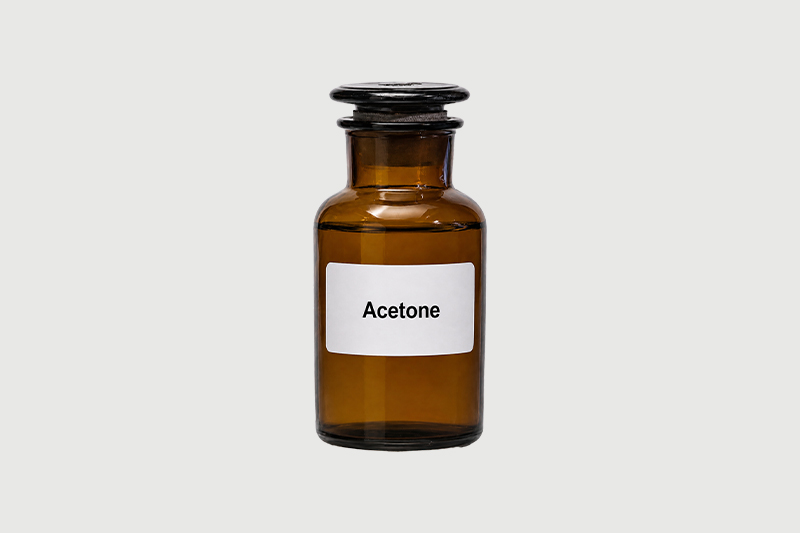
Iron drums or plastic drums (anti-static required) are commonly used. Brown glass bottles (to prevent direct light exposure) can be selected for small daily storage. Ordinary rubber stoppers cannot be used as they will swell; PTFE or aluminum foil inner caps must be adopted.
It belongs to Category 3.1 low flash point flammable liquid. Transport vehicles must be marked with warning signs for flammable liquids. Tank trucks shall be equipped with grounding chains to discharge static electricity. Operators shall wear anti-static clothing, and chemical fiber clothes are forbidden.
Get a customized quote for your specific requirements. Our technical team will respond within 24 hours with pricing, availability, and formulation options.
Toluene is a major basic chemical raw material; it is widely used as an industrial solvent and as a chemical intermediate for further processing, and also serves as a blending component for gasoline.
Sodium isobutyl dithiophosphate is a highly efficient collector widely used in the flotation of non-ferrous and precious metal sulfide ores.